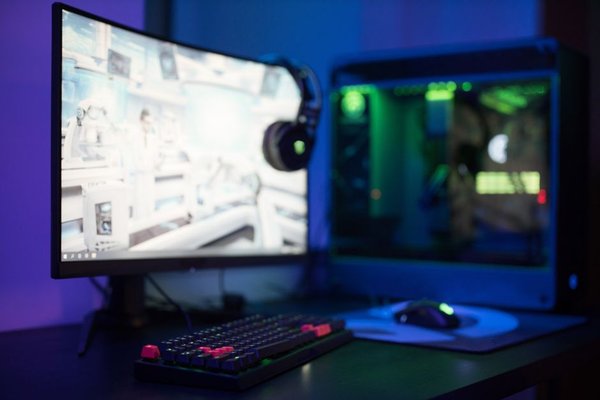
Choosing between a gaming PC and a console is less about finding one universally “better” platform and more about deciding which compromises fit the way you play. A console gives you a predictable, plug-and-play experience with a lower barrier to entry, while a gaming PC offers much more control over performance, upgrades, peripherals, and software. The right choice depends on your budget, favourite games, playing space, and appetite for hardware tinkering.
Upfront Cost: Consoles Are Easier to Budget For
One of the clearest console gaming benefits is predictable upfront cost. You buy the system, connect it to a TV or monitor, sign in, and start installing games. A controller is included, and there is no need to choose a processor, graphics card, motherboard, power supply, cooling system, or compatible case.
A gaming PC often costs more at the start, especially if you want performance that clearly exceeds current consoles. The total can also rise once you add a monitor, keyboard, mouse, or headset. The advantage is flexibility: you can build around a budget, reuse parts, buy a prebuilt system, or upgrade gradually instead of replacing the whole machine.
Look beyond the purchase price. PC players generally do not pay a platform subscription for standard online multiplayer, while console owners may need a paid online service for many multiplayer games.
Performance: PC Has the Higher Ceiling
Performance is one of the strongest gaming PC advantages. A powerful PC can target higher frame rates, higher resolutions, stronger ray-tracing settings, and more detailed graphics than fixed console hardware. Competitive players may also prefer high-refresh monitors and the ability to lower selected graphics settings for better responsiveness.
Consoles still deliver strong performance. Because every owner uses a tightly defined hardware platform, developers can optimise games around known components. Many titles offer a choice between a quality mode focused on visuals and a performance mode focused on smoother frame rates. Supported games can also provide high-refresh-rate modes when paired with the right display.
The practical question is whether you will use the extra PC performance. A player enjoying story-driven games from a sofa may value simplicity more than small visual gains, while someone playing competitive shooters on a high-refresh monitor may care much more about frame rate and latency.
Game Libraries: Check Your Must-Play Titles First
A gaming platform comparison should start with the games, not the specifications. If a favourite series is limited to one platform, that can settle the decision immediately. Consoles still have ecosystem-specific releases, while PC offers huge libraries across major storefronts, independent games, older titles, strategy games, simulations, and community projects.
PC also tends to offer more freedom with mods, fan-made patches, and custom maps, although support varies by game. Consoles provide a more controlled environment, which can make buying and installing games simpler. Backward compatibility differs by platform, so check individual titles before assuming an older collection will carry forward.
Upgrades and Longevity: Flexibility Versus Consistency
A console remains essentially the same machine throughout its life. You may expand storage or add accessories, but the processor and graphics hardware stay fixed. The benefit is consistency: developers know the target hardware, and owners do not have to think about graphics-card compatibility or power requirements.
A PC takes the opposite approach. You can replace the graphics card, add memory, expand storage, or upgrade other compatible parts over time. That can extend the useful life of a system, but upgrades are not always simple because motherboard support, case space, cooling, and power supply capacity all matter.
A useful tip for a first-time PC buyer is to leave upgrade room from the start. A reliable power supply, sensible case airflow, and a motherboard with useful expansion options may save money later by reducing the number of parts that must be replaced during an upgrade.
Ease of Use: Consoles Win on Convenience
Consoles are built around a controlled experience. Games are designed for the hardware, controllers work with little setup, updates are straightforward, and there are fewer hardware combinations to troubleshoot. If you want to sit down after work, press a button, and play on the living-room TV, that simplicity matters.
PC gaming asks more from the owner. Drivers, launchers, graphics settings, operating-system updates, peripheral software, and occasional troubleshooting are part of the experience. Many people enjoy that control, but others would rather not think about it.
Consider two friends with a free Friday evening. One wants to launch a co-op game from the sofa with minimal setup. The other likes adjusting graphics settings, using a mouse and keyboard, running voice chat on a second monitor, and switching between games and other apps. The first is naturally better served by a console; the second is making real use of the PC’s flexibility.
Online Play and Your Friends
Your social circle can matter more than specifications. Cross-platform play is common in many major games, but it is not universal, and some titles handle cross-progression, voice chat, or account linking differently. Before choosing a system mainly for multiplayer, check the specific games your friends play.
Console online services often bundle multiplayer access with other benefits, while free-to-play games may be treated differently. PC multiplayer usually does not require a separate platform fee, although individual games can still charge subscriptions.
Which Setup Suits You Best?
Choose a console if you value a simple purchase, predictable hardware, living-room convenience, and minimal troubleshooting. It is also a strong choice when the games you want are concentrated in a particular console ecosystem or most of your friends already play there.
Choose a gaming PC if you want the highest performance ceiling, upgrade options, broad hardware choice, strong mouse-and-keyboard support, modding, multitasking, and more control over how games look and run. The higher starting cost makes more sense when you will actually use those advantages.
FAQ
Is a gaming PC better than a console?
A gaming PC can deliver higher performance, more upgrade freedom, and greater software flexibility, but a console is usually simpler and often cheaper to start with. The better option depends on which strengths matter to you.
Is PC gaming more expensive than console gaming?
It often costs more upfront to buy a strong gaming PC. Long-term costs vary because PCs can be upgraded gradually and generally do not require a platform subscription for standard online multiplayer.
Do consoles offer 4K and high frame rates?
Yes. Current consoles can output 4K and support high-frame-rate modes in compatible games, although actual resolution and frame rate vary by title and graphics mode. A high-end PC still offers a higher performance ceiling.
Should I choose the same platform as my friends?
If multiplayer is a major part of your gaming, that is often sensible. Cross-play reduces the importance of platform choice in many games, but checking your favourite titles before buying is still worthwhile.
Final Verdict
The gaming PC vs console decision comes down to control versus convenience. PCs reward people who want to customise, upgrade, tune performance, and use one machine for more than gaming. Consoles reward people who prefer a consistent experience with less setup and fewer hardware decisions. Choose the platform whose strengths match how, where, and with whom you expect to play for the next several years.