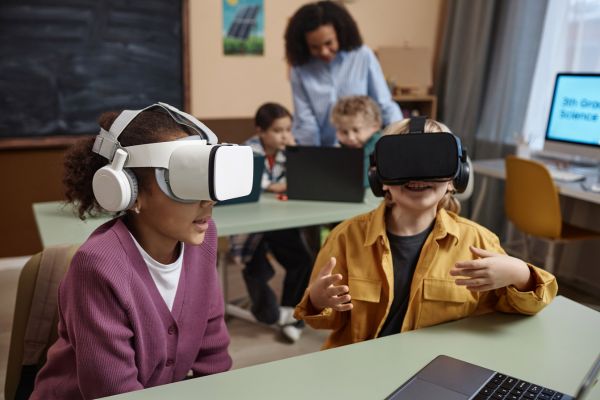
Education has always involved a little bit of play, even when it did not carry a modern label. Children learned counting through games, language through songs, teamwork through classroom activities, and problem-solving through puzzles. What has changed today is the way schools, teachers, and learning platforms are using game-like elements more intentionally to make lessons feel active, motivating, and easier to remember.
Gamification in education does not mean turning every lesson into a video game. It means taking useful parts of games, such as goals, progress, feedback, rewards, challenges, levels, storytelling, and friendly competition, and applying them to learning. When done well, it can help students feel more involved in the process. When done poorly, it can become distracting or shallow.
That is why looking at real gamification in education examples is helpful. It shows how the idea works beyond theory and how teachers can use it without losing the purpose of learning.
What Gamification Means in the Classroom
Gamification is the use of game elements in non-game settings. In education, this may include points for completing tasks, badges for mastering skills, progress bars that show growth, classroom quests, team challenges, leaderboards, role-playing activities, or digital simulations.
The main idea is motivation. Games are good at keeping people engaged because they give clear goals, immediate feedback, and a sense of progress. Students usually know what they are trying to achieve, how close they are to reaching it, and what they can do next. Traditional classroom tasks do not always feel that clear.
For example, a worksheet may feel like a set of random questions. But if the same activity is framed as a mission where students solve clues to unlock the next stage, the emotional experience changes. The learning goal may be the same, but the student feels more involved.
Still, gamification should support learning, not decorate it. A badge is useful only if it reflects real effort or progress. A points system works best when it encourages practice, not just speed. The strongest examples connect game elements directly to meaningful skills.
Points and Badges for Skill Progress
One of the simplest gamification in education examples is the use of points and badges. A student might earn points for completing reading assignments, solving math problems, participating in discussions, or improving quiz scores. Badges can represent specific achievements, such as “Fractions Master,” “Creative Writer,” or “Science Explorer.”
This works especially well when rewards are tied to learning milestones instead of random behavior. A badge for “showing work clearly in math” teaches students that the process matters. A badge for “revising an essay after feedback” reinforces growth and persistence.
The best systems avoid making points feel like bribes. Students should not feel that learning has value only because it earns a reward. Instead, points and badges should act like signals of progress. They help students see that small efforts are building toward something larger.
Teachers can also use badges to celebrate different strengths. Not every student will be the fastest reader or highest scorer. Some may shine through collaboration, creativity, organization, or improvement. A thoughtful badge system makes space for all of that.
Classroom Quests and Learning Missions
Quests are a popular way to make lessons feel more purposeful. Instead of saying, “Complete these three activities,” a teacher might frame the lesson as a mission. Students may need to investigate a mystery, solve a problem, gather evidence, or complete stages to reach a final goal.
In a history class, students might become “time detectives” examining primary sources to understand an event. In science, they might act as researchers trying to explain why a local ecosystem is changing. In language arts, students might complete writing challenges to build a final story or argument.
The beauty of quests is that they give learning a narrative. Students are not just doing tasks; they are moving through a journey. This can be especially helpful for younger learners, but older students can benefit too when the scenario feels thoughtful rather than childish.
A strong classroom quest has clear academic goals. The mission should not hide weak content. It should make strong content more engaging. If students are analyzing, comparing, explaining, designing, or reflecting, the quest is doing real educational work.
Leaderboards and Friendly Competition
Leaderboards are common in games, and they can appear in classrooms too. They show rankings based on points, completed activities, quiz performance, or team achievements. Used carefully, they can create excitement and encourage students to participate.
However, leaderboards are tricky. If the same few students always appear at the top, others may feel embarrassed or stop trying. A leaderboard that only rewards the highest score can make learning feel stressful rather than motivating.
Better classroom leaderboards focus on improvement, teamwork, effort, or rotating goals. For example, a teacher might highlight the students who improved the most this week, the teams that collaborated well, or the class average progress toward a shared goal. This makes competition feel healthier.
Another good approach is using group leaderboards instead of individual rankings. Teams can work together to solve problems, complete challenges, or reach class milestones. This turns competition into collaboration and reduces pressure on individual students.
Game-Based Review Activities
Review lessons are often where gamification feels most natural. Before a quiz or exam, teachers may use trivia-style games, classroom tournaments, question races, digital quiz tools, or board-game-inspired activities to help students practice.
A vocabulary review can become a word challenge. A math review can become a puzzle race where students unlock the next problem after solving the first. A science review can become a team-based question round where students explain not only the answer but why it is correct.
This kind of gamification works because review already involves repetition. Games make that repetition feel less dull. Students often answer more questions in a game format than they would on a traditional worksheet, simply because the energy of the room changes.
The important part is to keep accuracy and understanding at the center. Fast answers are not always thoughtful answers. Teachers can balance speed with explanation by awarding credit for reasoning, correction, or teamwork.
Role-Playing and Simulation Activities
Role-playing is one of the most meaningful forms of gamification because it helps students see a topic from inside the situation. Instead of only reading about a concept, students take on roles and make decisions.
In a civics class, students might act as lawmakers debating a policy. In a business class, they might manage a fictional company and respond to market changes. In environmental science, they might represent different community groups discussing land use. In literature, they might step into the perspective of a character and defend that character’s choices.
Simulations can make learning feel real. Students experience trade-offs, consequences, and uncertainty. They begin to understand that many problems do not have simple answers.
This is especially useful for subjects that involve systems, ethics, communication, or decision-making. A textbook can explain conflict, but a role-play can help students feel how complex conflict becomes when different people have different needs.
Progress Bars and Level-Based Learning
Many students feel more motivated when they can see their progress clearly. Progress bars and levels help with this. A course might be divided into levels such as beginner, explorer, builder, and expert. Students move through each level by completing tasks, practicing skills, or demonstrating understanding.
This approach can make large learning goals feel manageable. Writing a full research paper may feel overwhelming. But completing levels such as choosing a topic, finding sources, writing notes, drafting paragraphs, revising, and editing feels more achievable.
Progress bars also help students understand that learning is not instant. They can see that each step matters. This is encouraging for students who get frustrated when they do not master something immediately.
In a classroom, teachers can use simple visual charts, digital trackers, learning journals, or personal progress sheets. The goal is not to turn learning into a race. It is to help students recognize movement.
Storytelling as a Learning Framework
Stories are powerful because they give meaning to information. Some teachers use storytelling as a gamified structure for a whole unit. Students may enter a fictional world, follow a problem, meet characters, or complete episodes as they learn new concepts.
For example, a math unit might be framed around designing a city. Students use measurement, budgeting, geometry, and problem-solving to build their plans. A science unit might follow a mission to protect a habitat. A writing unit might involve creating a magazine, podcast, or fictional archive.
Story-based learning can make lessons more memorable because students connect facts with context. They are more likely to remember why something mattered, not just what the answer was.
This does not require expensive technology. A good story, clear goals, and well-designed activities can be enough. Sometimes a simple classroom narrative is more effective than a complicated digital tool.
Digital Games and Educational Platforms
Digital tools have made gamification easier to use in schools. Many learning platforms include points, levels, streaks, instant feedback, challenges, and adaptive practice. Students can work through activities at their own pace while teachers monitor progress.
Digital gamification can be helpful for subjects that require regular practice, such as math facts, spelling, language learning, typing, coding, or test preparation. Immediate feedback allows students to correct mistakes quickly instead of waiting days for graded work.
However, digital tools should be chosen carefully. A colorful screen does not automatically mean deep learning. Some platforms reward guessing or speed more than understanding. Others may keep students busy without encouraging real thinking.
Teachers should look at whether a tool helps students explain, apply, create, or reflect. Technology is most useful when it supports the lesson rather than becoming the lesson.
Best Practices for Using Gamification Well
Good gamification begins with the learning goal. Before adding points, badges, or missions, teachers should ask what students need to understand or practice. The game element should serve that goal.
It is also important to keep rewards balanced. External rewards can motivate students at first, but deeper motivation comes from confidence, curiosity, and a sense of progress. Students should feel proud of learning itself, not only of winning.
Choice is another useful practice. Games often feel engaging because players make decisions. In education, students might choose between project topics, challenge levels, roles in a group, or different ways to show understanding. Choice gives students a sense of ownership.
Feedback should be quick and useful. One reason games hold attention is that players know almost immediately whether something worked. In the classroom, feedback can come from teachers, peers, digital tools, self-checks, or reflection activities.
Finally, gamification should include every learner. Not all students enjoy competition. Some prefer quiet progress, creative tasks, or team roles. A thoughtful system offers different ways to succeed.
Common Mistakes to Avoid
The biggest mistake is using gamification as decoration. Adding points to a weak lesson does not make it strong. A confusing activity remains confusing even if it has a badge at the end.
Another mistake is overusing competition. Some students enjoy racing against others, but constant ranking can create anxiety. It can also make struggling students feel as if they are always behind.
Teachers should also avoid making rewards too easy or meaningless. If students receive badges for everything, the badges lose value. Achievements should represent real effort, growth, or skill.
There is also a risk of making the classroom feel too busy. Too many rules, levels, tokens, and scoreboards can distract from learning. Simple gamification is often better than a complicated system no one fully understands.
Conclusion
Gamification in education works best when it makes learning more active, clear, and meaningful. Points, badges, quests, simulations, progress bars, review games, and storytelling can all help students feel more connected to what they are learning. These methods can turn practice into progress and routine lessons into experiences that students remember.
But gamification is not magic. It needs thoughtful design, fair participation, and a strong connection to real learning goals. The most effective gamification in education examples do not simply entertain students. They help them think harder, practice longer, collaborate better, and see their own growth more clearly.
In the end, the purpose is not to make school feel like a game all the time. The purpose is to borrow what games do well: motivation, feedback, challenge, curiosity, and momentum. When those elements are used with care, classrooms can become more engaging without losing the depth and seriousness that good education deserves.