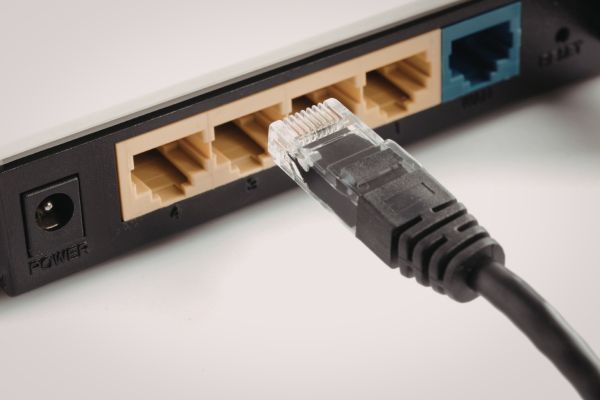
In a world that often feels dominated by wireless connectivity, Ethernet cables quietly continue to do the heavy lifting. They are the unseen backbone of reliable internet connections, delivering speed, stability, and consistency that Wi-Fi still struggles to match in certain situations. Yet, for something so essential, the process of choosing the best Ethernet cable can feel surprisingly confusing.
At first glance, a cable is just a cable. But once you start looking closer, you encounter categories, shielding types, bandwidth ratings, and performance claims that seem almost excessive. The truth sits somewhere in the middle. You don’t need to become a network engineer, but a little understanding goes a long way in making the right choice.
Why Ethernet Still Matters in a Wireless World
There’s a certain appeal to cutting the cord. Wireless networks are convenient, flexible, and increasingly powerful. But convenience doesn’t always equal reliability. Ethernet remains the go-to option for anyone who values a steady connection, whether for gaming, streaming, or professional work.
When you plug directly into a network using an Ethernet cable, you bypass many of the variables that affect Wi-Fi. Walls, interference, and network congestion all become less of an issue. The result is a connection that feels more predictable. It’s not necessarily about chasing the highest speed numbers, but about consistency—something that becomes obvious the moment a video call doesn’t drop or a large file uploads without interruption.
Understanding Ethernet Cable Categories
One of the first things you’ll notice when choosing the best Ethernet cable is the category label. These labels—Cat5e, Cat6, Cat6a, Cat7, and Cat8—represent different standards of performance. They define how much data a cable can handle and at what speed.
Cat5e, for example, has been around for years and still supports gigabit speeds quite comfortably. It’s often enough for basic home use, but it’s starting to feel like yesterday’s solution. Cat6 steps things up, offering higher bandwidth and better performance over shorter distances. It’s a popular middle ground for modern networks.
Then there’s Cat6a and beyond, which are designed with more demanding environments in mind. They support higher speeds and are better equipped to handle interference. While these cables sound impressive, it’s worth asking whether you actually need that level of performance. For many households, the difference between Cat6 and Cat6a may never be noticeable in daily use.
Speed, Bandwidth, and Real-World Needs
It’s easy to get caught up in specifications. Numbers like 10 Gbps or 40 Gbps can make one cable seem vastly superior to another. But real-world usage often tells a different story.
Your internet speed is usually limited by your service provider, not your cable. If your connection tops out at 100 Mbps or even 1 Gbps, a high-end cable designed for 40 Gbps won’t magically increase your speed. What it can do, however, is ensure that your network infrastructure doesn’t become a bottleneck.
Choosing the best Ethernet cable, then, is less about chasing maximum specs and more about aligning with your actual needs. A home office setup, a gaming console, or a smart TV all have different demands, but none of them require the absolute top-tier cable to function smoothly.
The Role of Shielding and Interference Protection
Another factor that often comes up is shielding. Some Ethernet cables are unshielded, while others include various layers of protection against electromagnetic interference.
In a typical home environment, unshielded cables work just fine. They are flexible, easy to install, and generally more than capable of delivering stable performance. Shielded cables, on the other hand, are designed for environments where interference is a real concern—places with heavy electrical equipment or dense cabling.
There’s a subtle balance here. More shielding doesn’t automatically mean better performance for everyone. In fact, shielded cables can be less flexible and slightly more difficult to work with. For most users, the simpler option often ends up being the more practical one.
Cable Length and Its Quiet Impact
Length might seem like a minor detail, but it plays a surprisingly important role. As Ethernet cables get longer, signal degradation can become a factor. This doesn’t mean your connection will suddenly fail, but it can affect performance at extreme distances.
For standard home setups, this is rarely an issue. Most Ethernet cables are designed to perform reliably up to 100 meters, which is far more than most people will ever need. Still, it’s a good habit to avoid unnecessarily long cables. Not only do they create clutter, but they can also introduce small inefficiencies that add up over time.
There’s also something to be said for neatness. A well-organized setup with appropriately sized cables feels more intentional, and that often translates into easier maintenance later on.
Build Quality and Durability Considerations
Not all Ethernet cables are built the same. Some feel sturdy and well-made, while others seem fragile right out of the package. The difference often lies in the materials used and the attention to detail in construction.
Connectors, for instance, are easy to overlook. A poorly made connector can lead to loose connections or intermittent issues that are frustrating to diagnose. Similarly, the outer jacket of the cable should be durable enough to withstand everyday use without becoming stiff or brittle.
If the cable will be routed through tight spaces or frequently moved, flexibility becomes especially important. A cable that bends easily without kinking is far more pleasant to work with and tends to last longer.
Future-Proofing Without Overthinking It
The idea of future-proofing can be both helpful and misleading. On one hand, it makes sense to choose a cable that won’t become obsolete too quickly. On the other hand, technology evolves in ways that are hard to predict.
Choosing the best Ethernet cable often means finding a comfortable middle ground. Opting for a slightly higher category than you currently need can provide some breathing room for future upgrades. But going too far beyond your actual requirements may not offer any tangible benefit.
It’s a bit like buying a tool you might use someday. There’s value in preparedness, but there’s also a point where it becomes unnecessary.
Practical Scenarios That Shape Your Choice
Different setups call for different considerations. A gaming enthusiast might prioritize low latency and consistent performance, while someone working from home might value stability during long video calls. A household with multiple devices streaming simultaneously might need a cable that handles higher data loads without hesitation.
Even within the same home, needs can vary. The cable running to a router might have different requirements than the one connecting a desktop computer. Understanding these small differences can make the process of choosing the best Ethernet cable feel less overwhelming.
The Subtle Satisfaction of Getting It Right
There’s something quietly satisfying about a network that just works. No buffering, no dropped connections, no unexpected slowdowns. It’s the kind of reliability that often goes unnoticed—until it’s missing.
Choosing the best Ethernet cable plays a small but meaningful role in creating that experience. It’s not the most glamorous part of a setup, but it’s one of the most dependable. And once it’s in place, it tends to fade into the background, doing its job without demanding attention.
A Thoughtful Conclusion on Making the Right Choice
Choosing the best Ethernet cable isn’t about chasing the latest standard or the highest number on a spec sheet. It’s about understanding your needs, recognizing the environment you’re working in, and selecting a cable that fits naturally into that context.
In many ways, the process mirrors how we approach technology as a whole. The best solutions are often the ones that feel effortless, the ones that integrate seamlessly into daily life. An Ethernet cable, simple as it may seem, can contribute to that sense of ease.
When you make a thoughtful choice, you’re not just buying a cable—you’re building a foundation for a more reliable and consistent connection. And in a world where connectivity underpins so much of what we do, that foundation matters more than we sometimes realize.